Deir El-Balamand Museum
History
Museum of Deir el Balamand
DAM has contributed in setting up a museum in the monastery of Our Lady of Balamand. The exhibit consists of about 50 varied artefacts, selected among the highlights of the rich collection of the monastery. It is divided into three major sections:
1. An introduction that includes the historical timeline of the monastery and its surroundings, and the history of the first Byzantine evidence from the site with two bread stamps of Byzantine tradition, used for Communion bread.
2. A medieval period section that is represented by decorative architectural stone elements belonging to both the Romanesque (12th century) and the Gothic style (13th century).
3. The largest section is devoted to the most recent historical period, the Ottoman one, which is subdivided in turn into several themes. After an introduction about the revival of the place in 1603 by the Orthodox community, the visitor can follow a thematic path which includes funerary stone objects, ceramic tiles from Damascus, manuscripts and illuminations, several icons, a liturgical dress, various liturgical implements such as crosses, chalices, patens, buckles and oil lamps, as well as Patriarch Gregory IV private collection.
Events
2024
DAM team welcomed 3rd and 4th grade students from Our Lady of Balamand School to the Deir el-Balamand Museum, where they visited the Monastery Museum and the Holy Bread exhibition. During the visit, students explored representations of nature, both flora and fauna; found on the displayed artifacts. Inspired by the museum’s collection, particularly the glazed tiles, the students concluded their visit by creating their own nature-themed artworks.
Exhibition
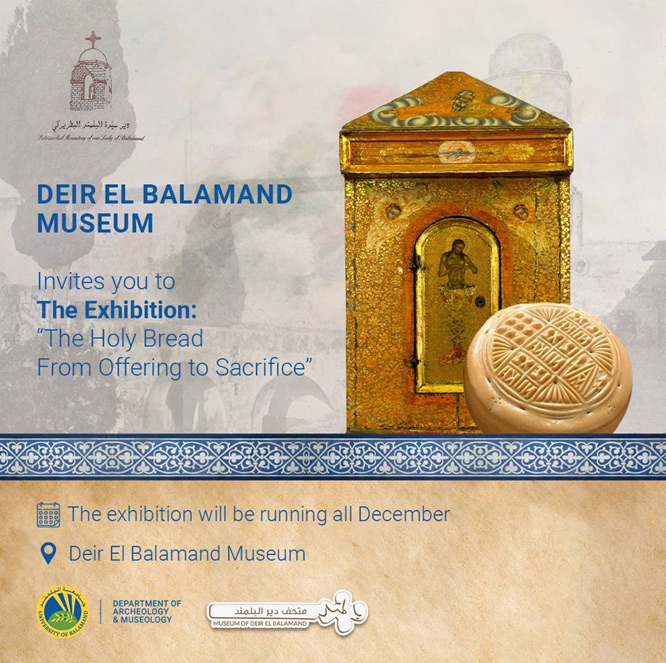
DAM team prepared an exhibition on the holy bread in the Deir El-Balamand Museum, where it elaborated on the steps of making the holy bread and the tradition surrounding it.
Press
2025
انطاكي، ب. متحف دير البلمند الجديد: كشف النقاب عن محفوظات الدير الرائعة، النشرة. بطريركية أنطاكية وسائر المشرق.
مجلة النشرة، العدد الثاني، ص ٤٧ ، ٢٠٢٥.